
Walls of Shame, an eye-opening documentary I discovered through an internet post, is about Romani school kids in modern-day Czech Republic. For the outsider like me, ignorant of the plight of these children, the film reveals what the average tourist on holiday does not witness, nor has the slightest inkling of. After watching this compelling film, I began searching for information on the history behind the Czech Roma story. Besides Paul Polansky’s informative articles on the Czech Lety Roma camp—Parts 1 and 2—I managed to get a copy of Black Silence, his 1998 book which gives a thorough account of the World War II era Roma death camp, Lety.

I drove out to the pig farm, a few miles to the east. I stopped an old man on a bicycle, and asked if he knew anything about the Gypsy camp during the war.
“Everybody knows about it,” he said. “In 1942/43 I rode by it every day on my way to work.”
“Was it a German camp?” I asked.
“Of course not,” he said. “No Germans were in this area during the war.”
“Who were the guards?”
“Czech policemen.”
— From Black Silence, by Paul Polansky
On a personal note…
From the very beginning, watching Walls of Shame unfold, I immediately felt a deeply rooted connection to the children in the documentary. Their untenable situation of being subjected to confines set-up within the Czech educational system, simply because of their ethnic heritage, struck uncomfortably close to home. Watching and hearing them tell their stories of what it’s like being restricted to a walled-in community and having to attend “special” schools, was deeply painful. That these precious children are made to feel diminished, and are deprived of an education equal to that of other Czech children, was, indeed, for me, déjà vu.
The obvious intention of the Czech educational system to offer the Roma kids a wholly inadequate and truncated education that denies them the opportunity to realize their hopes and dreams, evoked old memories of my life as a kid attending the de facto segregated public schools in New York City of the 1940s and 50s.
Like that of two children in the video, luckily, my talent was noted by an observant and empathic adult, and I, too, was rescued. While a student at an all-black girls middle school in Harlem, my savior happened to be a new, young substitute art teacher, Zelmar Perlin. Ms. Perlin was a graduate of New York’s prestigious High School of Music & Art, LaGuardia High School, and was the person who encouraged me to create a portfolio, apply for admission to her alma mater, and follow my desire to be an artist/painter.
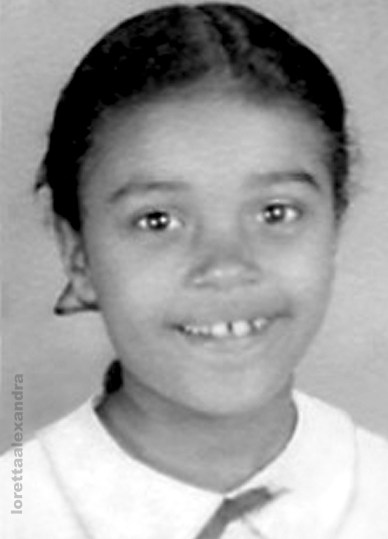
— Loretta at P.S. 90 in Harlem, NYC, age 8
 Loretta Alexandra